What Walls Say Without Words: The Communicative Power of Architectural Materials
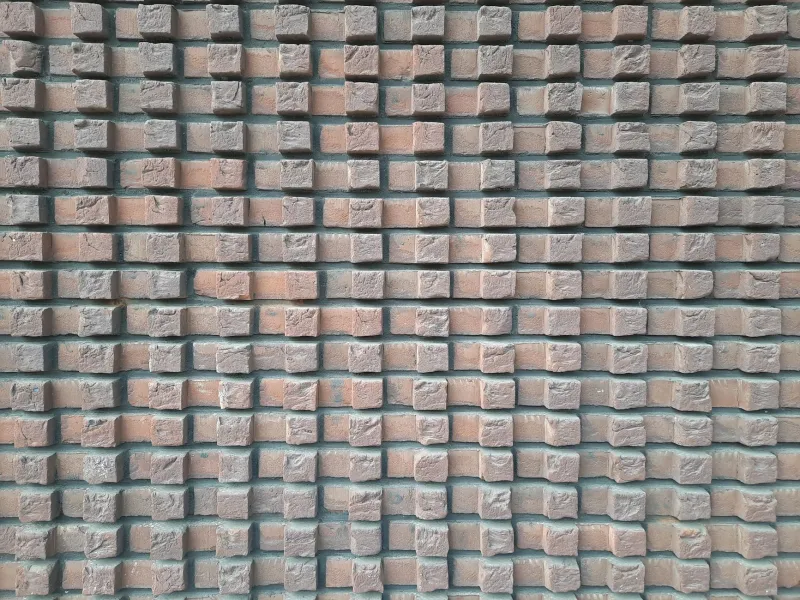
There is a moment, familiar to anyone who has approached a truly considered building, when something shifts before you even reach the door. The texture of a stone facade catches afternoon light at an unexpected angle. A weathered copper panel signals age and permanence. Raw concrete speaks of industrial honesty. None of these impressions require a placard or a guided tour. They arrive immediately, instinctively, and they begin shaping your relationship with a space before you have set foot inside it.
This is the hidden language of materials—and for architects committed to design that defines both space and purpose, it is among the most powerful tools in the profession.
Every Surface Is a Statement
Architects have long understood that material selection is never purely a technical decision. The choice between a matte limestone cladding and a high-gloss ceramic tile is not simply a question of durability or maintenance cost. It is a question of what the building is trying to say.
Texture communicates approachability. Rough-hewn surfaces invite the hand and suggest craft, history, and organic process. They slow perception down, encouraging a visitor to pause and look closely. Smooth, reflective finishes do the opposite—they project efficiency, precision, and forward momentum. Neither is inherently superior. What matters is whether the material's message aligns with the building's purpose.
Finish quality communicates investment and intent. A brushed stainless steel entry surround tells a visitor that detail was considered, that nothing was left to chance. A carelessly applied veneer communicates exactly the opposite, and no amount of interior design can fully override that first impression.
Patina—the accumulated character that time and use deposit on a material—communicates something even more nuanced: longevity, authenticity, and a willingness to exist in honest relationship with the environment. Architects working in urban revitalization contexts understand this acutely. When a formerly neglected industrial district is being reimagined, the decision to retain original brick rather than resurface it is not nostalgia. It is a deliberate act of material storytelling, one that anchors new development within a legible history.
Case Study: Reclaimed Brick in the American Urban Context
Consider the transformation of former warehouse districts in cities like Detroit, Pittsburgh, and Richmond, Virginia. In each of these locations, adaptive reuse projects have deliberately preserved original masonry not because it was the least expensive option, but because the aged brick carried irreplaceable communicative value. The variation in color, the evidence of previous openings, the ghost marks of removed signage—all of these imperfections constitute a material record that new construction cannot fabricate.
Visitors to these reimagined spaces respond to that record even when they cannot articulate why. Research in environmental psychology consistently shows that materials with visible history generate stronger feelings of trust and belonging than pristine surfaces. For mixed-use developments trying to establish a sense of community, this is not a minor consideration. It is foundational.
The Tactile Contract Between Building and Occupant
Material language is not only visual. The tactile quality of a surface—its temperature, its resistance or yield under the hand, its acoustic behavior—contributes to what might be called the tactile contract between a building and the people who inhabit it.
Warm materials like wood and cork absorb sound and body heat, creating spaces that feel intimate and contained. They are well-suited to environments where sustained concentration or personal interaction is the goal. Cool materials like stone and glass reflect both sound and temperature, producing spaces that feel expansive and stimulating. They serve well in public gathering areas, lobbies, and commercial corridors where energy and movement are desirable qualities.
When these tactile registers are mismatched with a building's program—when a healthcare facility is finished entirely in hard, reflective surfaces, for example, or when a collaborative office uses materials that absorb all acoustic energy—the result is a space that works against its own purpose. The materials are speaking, but they are saying the wrong thing.
Material Honesty as a Design Philosophy
One of the defining principles in serious architectural practice is material honesty: the idea that surfaces should reveal, rather than conceal, their true nature. A concrete wall that is finished to look like stone is not merely an aesthetic choice—it is a communicative act, and one that many architects regard as a form of deception. The material is pretending to be something it is not, and perceptive occupants often sense the inauthenticity even if they cannot name it.
Conversely, buildings that express their materials truthfully tend to generate stronger emotional investment from the people who use them. There is a reason that exposed structural steel in a renovated loft commands a premium in the residential market. The material is not hidden or apologized for. It is presented as evidence of how the building was made, and that transparency reads as confidence.
For commercial clients, this philosophy has direct implications. A law firm that clads its offices in genuine walnut paneling rather than laminate veneer is not simply spending more money on the same effect. It is making a statement about permanence, substance, and the quality of its judgment—values that transfer directly to how clients perceive the firm itself.
Designing with Environmental Context in Mind
Material communication is also relational. A building does not exist in isolation; it exists in dialogue with its surroundings, and the materials that speak clearly in one context may be incoherent in another.
In the arid Southwest, rammed earth and adobe carry deep cultural resonance. They connect a building to regional craft traditions and to the thermal logic of the desert climate. The same materials installed in a Pacific Northwest coastal development would read as incongruous—not because they are inherently inferior, but because they are speaking a language foreign to their setting.
Regional material literacy is therefore an essential dimension of architectural practice. Architects who understand the material vernacular of their context—who know which stones are quarried locally, which timber species are native, which industrial byproducts can be repurposed from nearby manufacturing—are able to design buildings that feel genuinely rooted. That rootedness is not merely aesthetic. It communicates responsibility, specificity, and a meaningful relationship between the building and the place it occupies.
The Long Conversation
Materials do not deliver a single message and fall silent. They continue speaking as they age, as light changes across them through the day, as seasons alter their appearance and texture. A well-chosen material palette creates a building that remains communicatively rich for decades—one that offers new things to notice on the hundredth visit that were invisible on the first.
This is what distinguishes architecture that merely functions from architecture that endures. The former solves a problem. The latter initiates a conversation—one conducted not in words, but in the honest, immediate, and irreplaceable language of material itself.
At Gab de Arq, this understanding informs every phase of our work, from initial concept through specification and delivery. We believe that the most meaningful buildings are those in which every surface has been chosen with intention—because when materials speak clearly, spaces come fully alive.